Most people think of washer and dryer installation as a simple appliance hookup. Slide the machines into place, connect a couple of hoses, plug them in, and you are done. The reality i is this it is more involved, and the consequences of an installation done without attention to the plumbing and venting requirements can range from reduced appliance performance to water damage to a dryer fire. Long Beach Pro Plumbing Inc handles washer and dryer installations including supply line connections, drain standpipes and gas line connections for gas dryers.
The washing machine water supply connection uses a pair of hot and cold hose bibs, called laundry valves or washing machine valves, that accept the braided supply hoses shipped with most machines. These valves need to be in functional condition, shutting off fully when closed, and located within the reach of the supply hoses without putting tension or a sharp bend on the hose. Supply hoses on washing machines are a documented source of significant water damage claims in residential properties. Rubber hoses age, the interior liner degrades, and the hose can fail at pressure without warning. Stainless steel braided hoses with quality ferrule-crimped fittings are the appropriate choice for a permanent installation, and if the existing rubber hoses are more than five years old, replacing them during an installation is the right call.
Hot and cold supply lines to a laundry area may be half-inch or three-quarter inch depending on the age and layout of the plumbing system. The washing machine valve requires a connection that matches the existing line size. In older homes with galvanized supply lines, the condition of the shutoff valve at the laundry hookup often needs to be assessed before the machine is connected. A gate valve that has not been operated in years can fail to close fully, and a ball valve that has corroded may not operate at all. We replace non-functional laundry valves as part of the installation process when we find them.
The drain connection for a top-load or front-load washing machine requires a standpipe and trap configuration that meets California Plumbing Code requirements. The standpipe must be between 18 and 30 inches in height above the trap weir, per CPC standards, to allow the washing machine pump to discharge without creating backpressure or causing the drain to overflow. The drain pump on a standard washing machine discharges at flow rates up to 15 to 17 gallons per minute, which requires a two-inch minimum drain line to handle the flow without backing up out of the standpipe.
In places where the laundry area was not originally designed for an automatic washer, or where someone added a hookup without proper permits, we frequently find standpipes that are undersized, too short, or draining into an improperly vented line. A standpipe that drains into an unvented branch will siphon the trap seal dry after each drain cycle, allowing sewer gases to enter the laundry area. We verify that the drain configuration provides adequate venting, either through connection to a properly vented drain line or through the installation of an air admittance valve where allowed by local code and practical given the location.
Gas dryer connections involve a flexible appliance connector, a dedicated shutoff valve at the wall, and a supply line sized to deliver adequate BTU input to the dryer’s burner. Residential gas dryers typically require between 20,000 and 22,000 BTU/hr at the appliance connection. The flexible connector used must be an approved appliance connector rated for gas service, not a generic flexible hose. California does not allow reuse of old gas connectors, and a connector that was bent or kinked during a previous installation needs to be replaced even if it shows no visible damage. We test the completed gas connection with a combustible gas detector before the dryer goes into service.
Electric dryer installations from a plumbing standpoint involve only the drain connection and supply water connection if the machine includes a steam cycle feature. Some high-end electric dryers include a cold water inlet for steam generation that requires a dedicated supply connection. These connections use standard quarter-turn valves and braided supply lines, and we install them as part of the appliance hookup service.
Dryer venting, while not a plumbing trade item in the strictest sense, is something we assess and address as part of a complete installation because improper dryer venting is one of the leading causes of residential fires and is directly related to how the appliance connection is set up. California requires dryer exhaust ducts to terminate at the exterior of the building, to use rigid or semi-rigid metal duct rather than flexible plastic or foil accordion duct except for the short connector section behind the machine, and to be no longer than the manufacturer’s specified equivalent duct length accounting for elbows and transitions. Plastic accordion duct accumulates lint, collapses over time, and is a recognized fire hazard. We verify that the exhaust duct material and routing meet current requirements.
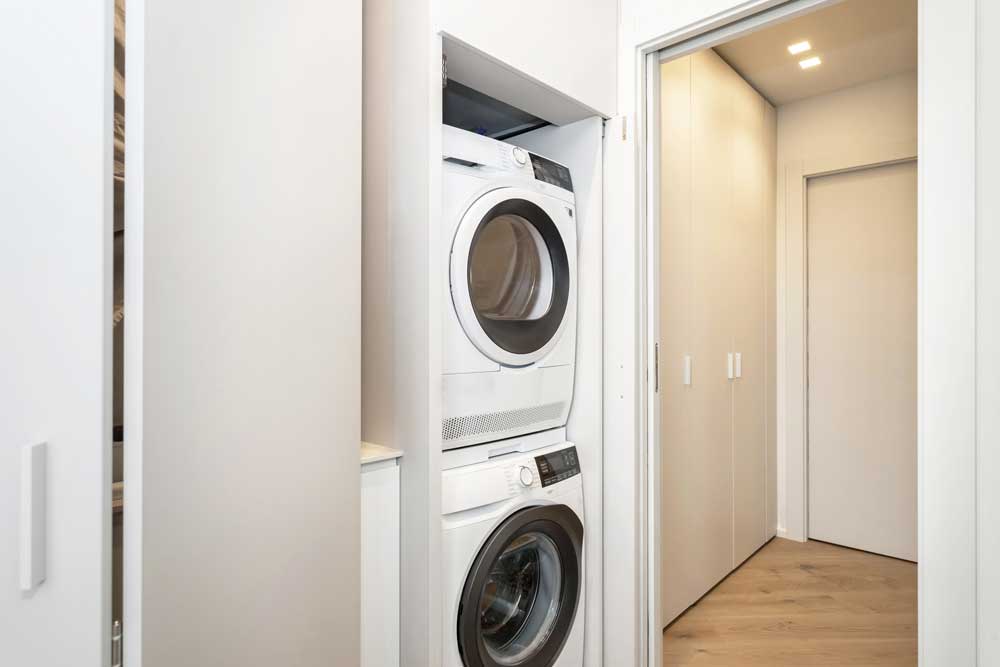
Stackable washer and dryer units present installation challenges specific to their configuration. The stacked pair must be secured with the manufacturer-specified stacking kit to prevent the dryer from moving during use. The supply and drain connections for the washer in a stacked pair need to be accessible without moving the unit, which affects where valves and cleanout access points need to be located.
Long Beach Pro Plumbing Inc coordinates washer and dryer installations to make sure the utility connections are done correctly from the start. If you are adding laundry to a space that does not currently have hookups, relocating your laundry area, or replacing old machines and want the connections properly assessed and updated, give us a call and we will handle the plumbing side of the job the right way.